Bare spots in the lawn can be a major source of frustration for homeowners. They tend to stick out and become noticeable eyesores. But what’s involved in bare spot repair in North Texas? And when does the problem warrant a full lawn renovation as opposed to individual spot repair?
When it comes to lawn restoration efforts, it can really boil down to not only what shape your lawn is in but also what your expectations and timeline are. If you’re looking for a fully restored lawn in a short amount of time, you might not want to wait around for bare spot repair efforts and might want to choose a full lawn renovation.
But what considerations do you need to keep in mind?
In this article, we’ll talk about what you should do to repair bare spots in the lawn (as well as what to expect about the process).
Jump to:
What causes bare spots in the lawn?
Why do you have bare spots in the first place? Understanding the cause behind your patchy, thin areas is important in solving the problem. Some issues might keep happening, even after making restoration efforts, so you want to make sure you’re actually solving the problem instead of just “sticking a bandage on it.”
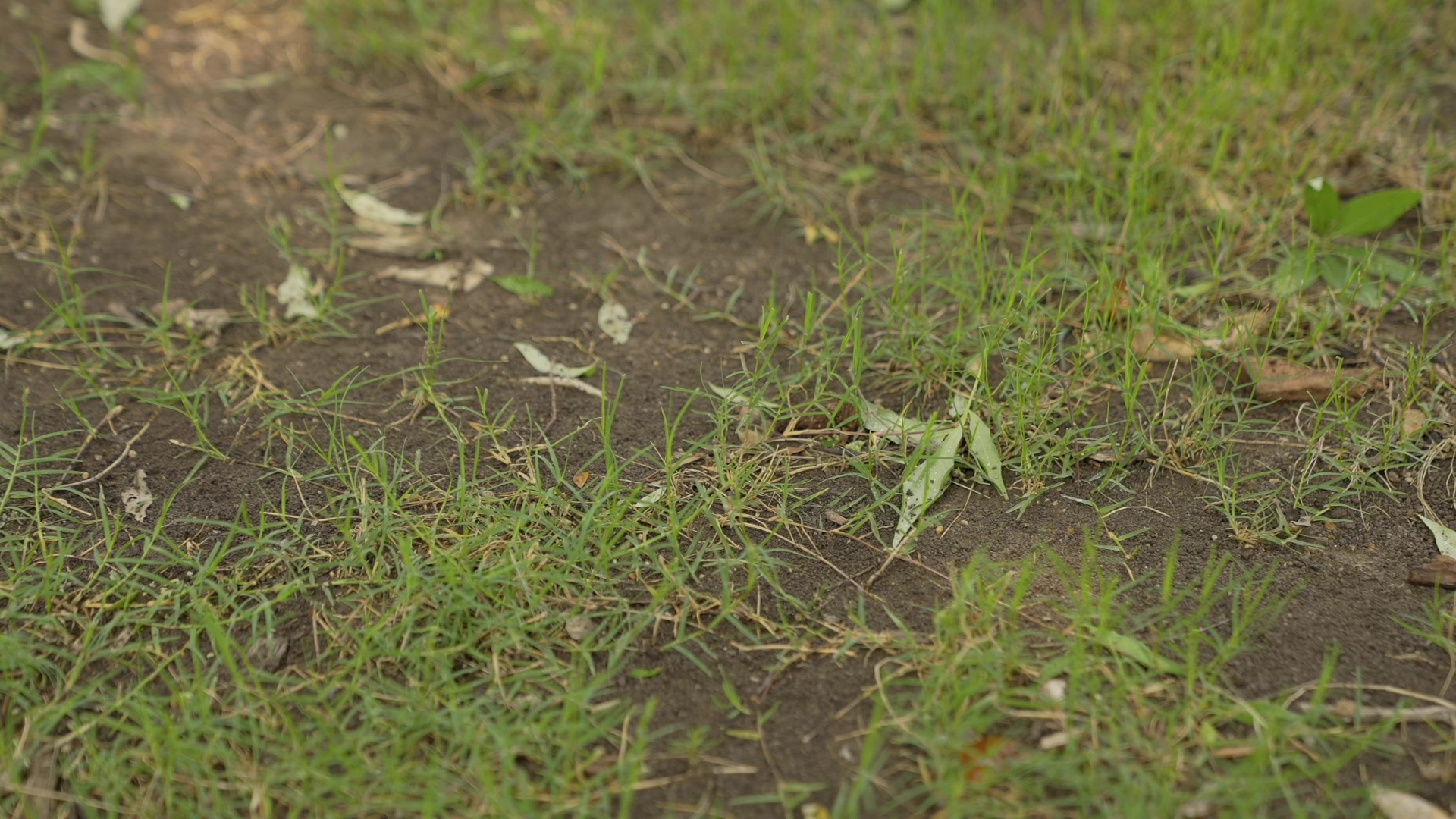
Here are just some potential reasons why you may be struggling with bare spots or thin areas.
- Lawn pests: Various lawn pests can lead to bare spots in the lawn. Lawn grubs, for instance, feed on the roots of your turf and can leave behind brought spots and eventually bare patches. Surface-feeding insects can also cause lawn damage that leads to bare spots. Surface-feeding insects like chinch bugs feed on lawns by sucking out plant fluids. This can cause lawns to turn yellow and then brown, and ultimately die if not addressed soon enough.
- Lawn fungus: Lawn diseases are a prevalent problem here in North Texas due to our climate. Extreme heat, limited rainfall, and rising humidity can create a recipe for fungus to start growing. There are a lot of different lawn diseases but three that we commonly see in our region include Brown Patch, Dollar Spot, and Summer Patch.
- Soil health: If your lawn has poor soil health, you might have bare patches or thin areas. Before you repair bare spots in your lawn, you want to make sure that you correct soil health issues so that the problem doesn’t just keep repeating. Whether it’s an issue with soil pH, nutrient imbalances, or even an issue with soil structure (compacted soil is tough for grass to grow in), there are solutions out there.
- Shade: If your bare spots are in areas where the grass isn’t receiving enough sunlight (such as under trees), then it could be an ongoing problem without an easy solution. Growing grass in shade is very challenging and might even require grass alternatives if tree removal is not an option.
- Grass type: Some grass types simply don’t perform as well in our region as others. If your lawn is constantly under-performing, it’s possible that you might not have an optimal grass species growing. In addition, we often find that most homes in our area are receiving a contractor grade turf with little to no preparation when it’s installed. In other words, you may have been set up for failure from the start!
When to choose bare spot repair in North Texas
No matter what the reason that you have them, patchy, bare spots in the lawn can be incredibly frustrating. They’re an eyesore that can really detract from your enjoyment of the lawn. But just because you have bare patches does not necessarily mean you need to completely renovate your lawn.
You can repair bare spots in the lawn individually instead of completely renovating the entire turf. We generally feel that patching can be reasonable if the majority (80%+) of the lawn is still healthy.
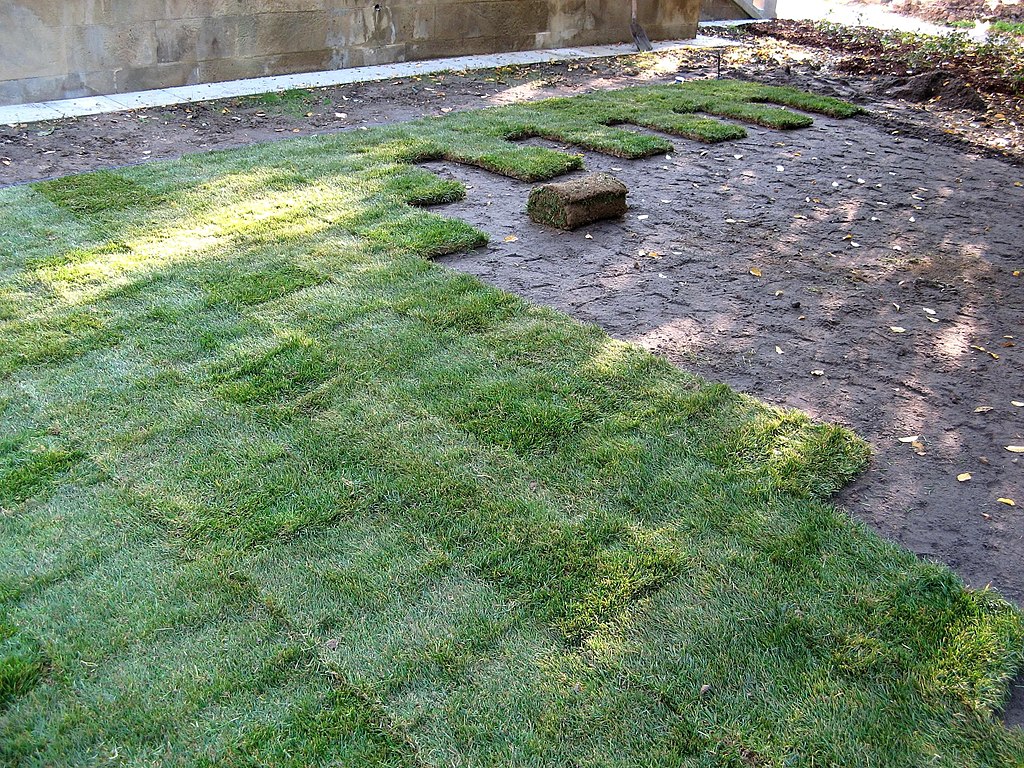
Filling in bare spots individually involves using individual pieces of sod. Seeding is generally considered difficult here in North Texas due to our climate.
We try to educate the client on the probability of success whether we are recommending a small patch-work job or a full renovation. Managing expectations is very important and understanding budgets is often the biggest determining factor.
A complete renovation can be expensive but high expectations justify the complete renovation if the budget allows. We’ll talk about that next.
When to choose full lawn renovation
If the lawn is mostly weeds and struggling turf, we would strongly recommend a complete lawn renovation.
This involves diagnosing removing existing turf, treating weeds, repairing soil health issues, making irrigation tweaks, and installing new sod. It’s a complete re-do, so it’s a lot more involved. But some of the advantages of a lawn renovation include rebuilding the lawn from the ground up and ultimately gaining long-term success.
However, even when it’s needed, the cost can be prohibitive to some.
The North Texas lawn renovation cost can be pricey. We have a lot of clients that need a full renovation but it’s beyond their budget.Unfortunately, this sometimes leads them to seek a second opinion from a low cost supplier, only to be calling us the next season because the new sod died.
Bare spot vs. full renovation of the lawn
Repairing bare spots or choosing a total lawn renovation largely does boil down to the condition of the lawn, your expectations, and what you’re willing to spend.
But there are other factors to consider as well. When a homeowner is trying to determine whether they want to attempt a bare spot vs. full renovation of the lawn, some of the questions we might ask include:
- How quickly do you want to see results?
- Are you looking for a short-term fix (putting the home on the market) or a long-term solution (forever home)?
- What is your budget or what level of investment are you thinking of making for this project?
- Are you willing to address underlying issues (shade, irrigation, turf type, etc)?
Let’s do a side-by-side comparison of a bare spot vs. a full renovation of the lawn so that you can weigh your options.
Repair Bare Spots in Lawn Total Lawn Renovation
Focuses only on bare patches Brand-new complete lawn
Less costly Large investment
Faster and less disruptive Significant undertaking
May not solve underlying issues Corrects deeper rooted issues
Works best when around 80% is healthy Larger problem areas
May only be a quick fix Should be a long-term solution
What is the best time of the year to repair a lawn?
The best time of the year depends on what the client is trying to accomplish. We install new turf year-round in North Texas. Many people like to get new yards in the early Spring assuming we will get a lot of beneficial rainfall and reduce their watering costs. That works when we get enough rain but that’s not always reliable.
We do like to renovate yards in the Fall because the grass will be dormant and we will be able to proactively address weed control through preemergent herbicides. The grass will be able to start growing whenever the weather allows (soil temps, more moisture, etc).
Some homeowners want to sell their homes in the middle of the Summer and we will install new turf or do bare-spot renewals then as well.
We install sod every month of the year but the peak season is early Spring through mid-June and early Fall through November.
FAQs on bare spot repair
Before we wrap up, let’s answer some of your commonly asked questions.
Why do I have bare spots?
It could be for various reasons. We are always trying to understand the root cause. Problems we typically encounter are: Poor soil health, poor drainage, lack of proper water coverage, insect damage, turf disease, shade, soil compaction, and poor maintenance (i.e. not mowing often enough or not mowing at the proper height). The age of the lawn can and is typically an issue and most homes in our area are receiving a contractor grade turf with little to no preparation.
Will fertilizer fill in bare spots?
No, fertilizer alone will not fill in bare spots. Fertilizer only works with existing grass, helping it to receive the nutrients it needs to grow healthy and strong. Under-fertilizing can lead to bare spots as grass under-performs, so it does play an important role. But it’s not going to help new grass grow.
Why are bare spots getting larger?
Bare spots continue to get larger if the underlying cause of the problem is not being addressed. Whether it’s soil health, pests, or compacted soil, if the problem is not corrected, you’ll continue to have issues with thinning turf.
Can too much shade cause thinning grass?
Yes, too much shade can cause grass to thin. All grass types require sunlight (even shade-tolerant species). If you have a thick canopy of trees, you might need to consider pruning, a grass alternative, or tree removal if you want to solve this problem.
Choosing lawn care services in North Texas
We understand that you may be embarrassed and frustrated with the lawn you’re currently looking at. We’d love to help you figure out the best choice for your home. A lawn renovation can be a big undertaking which is one of the reasons why you want to make sure it’s performed by a pro.
Still have questions about the process or what your lawn specifically needs? We’re here to be your guide. We can help you determine which path is best for you to take as you aim to repair your lawn.
Choosing the best lawn renovation service is an important decision that will directly impact your results. Don’t get caught up with gimmicks that are meant to lead you astray. Focus on the information that you know matters most and you’ll ultimately make a wise choice.
Get the best lawn on the block. We’ll be happy to provide you with a free quote for repairing your lawn and then also a quote to keep it looking just as beautiful over the years.