Is your lawn struggling in North Texas? Like a lot of homeowners, you might feel as though you’re doing all the right things and your lawn still has problems. Whether it’s bare patches, weed pressure, yellowing, or all of these combined, you’re tired of dealing with it all!
You want to know how to fix an unhealthy lawn.
First and foremost, you should know that lawns are complicated. “Doing everything right” is tricky with lawns as a lot of the advice out there is generic and your lawn is unique. How your lawn is performing comes down to many different factors, including what’s going on at the subsurface level with your soil health.
In this article, we’ll dive into some of the different problems that your lawn might be experiencing and why you’re seeing them on repeat. The path to a healthy lawn truly shouldn’t feel like such a mystery.
Jump to:
Why isn’t my lawn healthy?
Lawns can struggle even when you’re seemingly doing all the right things. You’re watering, mowing, and even fertilizing. So, why is your lawn still a mess?
A struggling lawn in North Texas usually shows up with various signs and symptoms, including weed pressure, bare spots, and discoloration being the most common. But the causes behind these issues can be plentiful.
There are many invisible issues that can be happening without you noticing. Problems like pests and diseases, unhealthy or compacted soil, or poor drainage can be leading to trouble.
Performing important tasks improperly such as mowing or watering wrong can also lead to an unhealthy lawn in North Texas.
Since there can be many reasons why your lawn is struggling, it’s important to start with the symptoms and work from there for a diagnosis. It’s quite common for there to be more than one issue at hand.
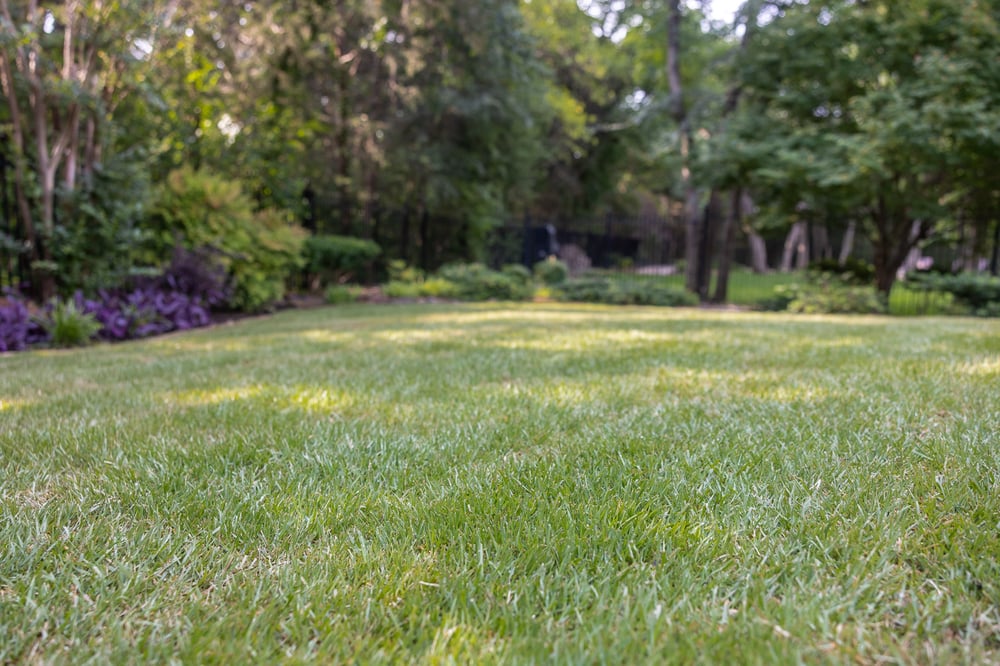
Identifying the symptoms of an unhealthy lawn in Texas
A lot of people might say they feel like they have an unhealthy lawn, but it’s important to identify exactly what symptoms your lawn is dealing with.
Here are some of the common symptoms of an unhealthy lawn in North Texas.
- Discoloration (yellowing or browning)
- Bare spots or thin areas
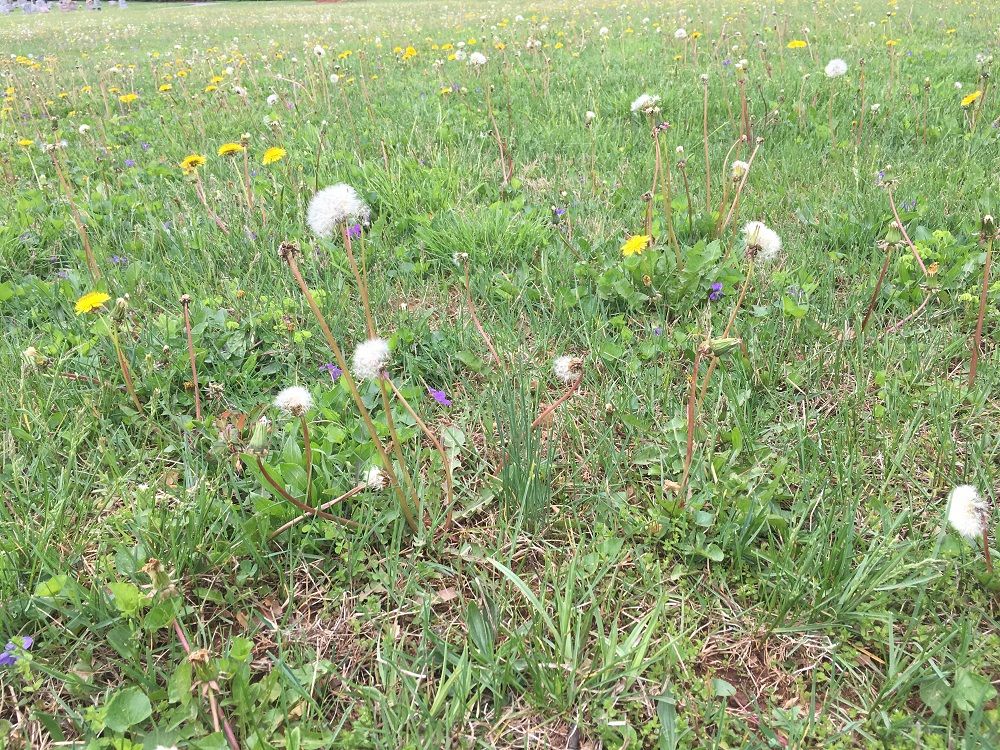
- Weeds overtaking healthy grass
Knowing exactly what your lawn is dealing with is a good starting point. Unfortunately, it’s just that (a start), as various different problems can cause the same symptoms to show up. You’ll have to dive deeper from here to get to the causes of your struggling lawn.
Common causes of a lawn struggling in North Texas
Let’s dive into some of the potential causes behind the symptoms that you might be seeing. Keep in mind that your lawn might be dealing with more than one of these at once.
Soil health
Healthy soil is the foundation of a healthy lawn…but it’s something that gets commonly ignored. Since this involves what’s happening at the subsurface level, homeowners aren’t always aware that they even have a problem with their soil. But if you’re asking Why my lawn looks unhealthy, this could very well be it.
Potential soil health concerns include:
- Compacted soil: Our sandy loam soil type is highly prone to compaction. When lawns become compacted, it’s difficult for water, nutrients, and oxygen to reach the roots.
- Nutrient deficiencies: This is where lawn fertilization becomes so important. Lawns require the proper amount of nutrients to thrive.
- pH imbalances: Soil pH can dictate nutrient availability, microbial activity, and overall lawn health.
Watering mistakes
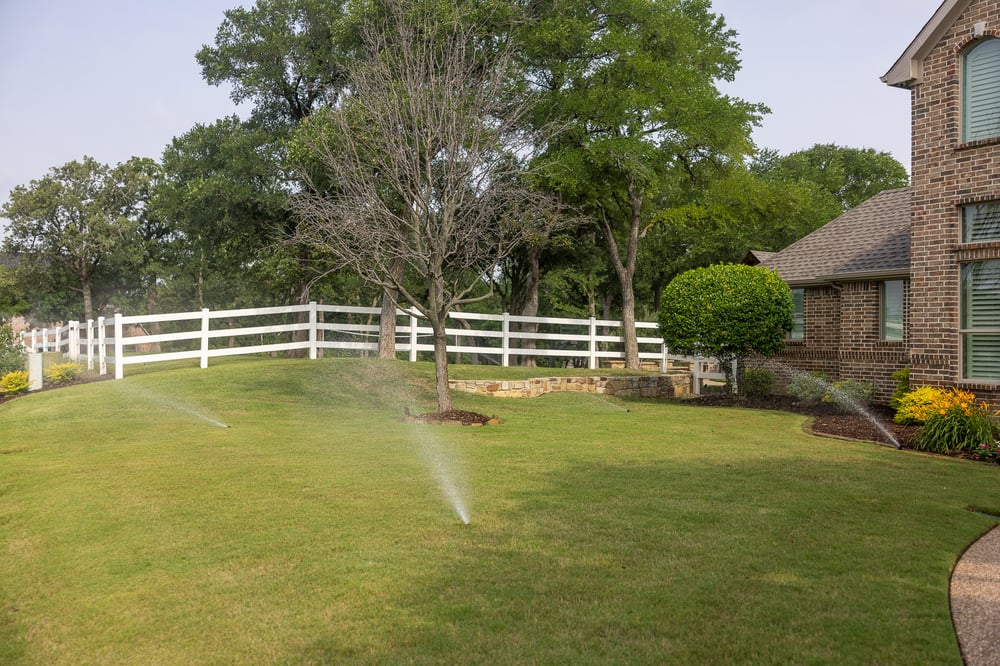
When a lawn looks unhealthy, sometimes it’s a matter of improper watering. It could be anything from the amount that you’re putting down to when you’re doing the watering. We know that a lot of homeowners believe anytime is a fine time to water. But this isn’t actually the case.
In fact, watering in the evening can actually leave your grass prone to fungal growth. That’s because you aren’t allowing the sun to evaporate excess water and those hot, wet conditions are “just right” for the growth of lawn fungus.
Ensuring that your lawn is receiving the right amount of water is also critical. Lawns require one to two inches of water per week.
During the summer, we typically recommend watering three to four days per week to achieve that goal. In the winter, you can plan on watering your lawn in the morning, once a week.
While it’s more common in North Texas to be under-watered, overwatering is a thing too. Watering too much can drown your grass roots. This becomes more of an issue when the soil is compacted and water becomes waterlogged. The soil becomes soggy because water isn’t moving well down to the lower subsurface levels.
Improper mowing
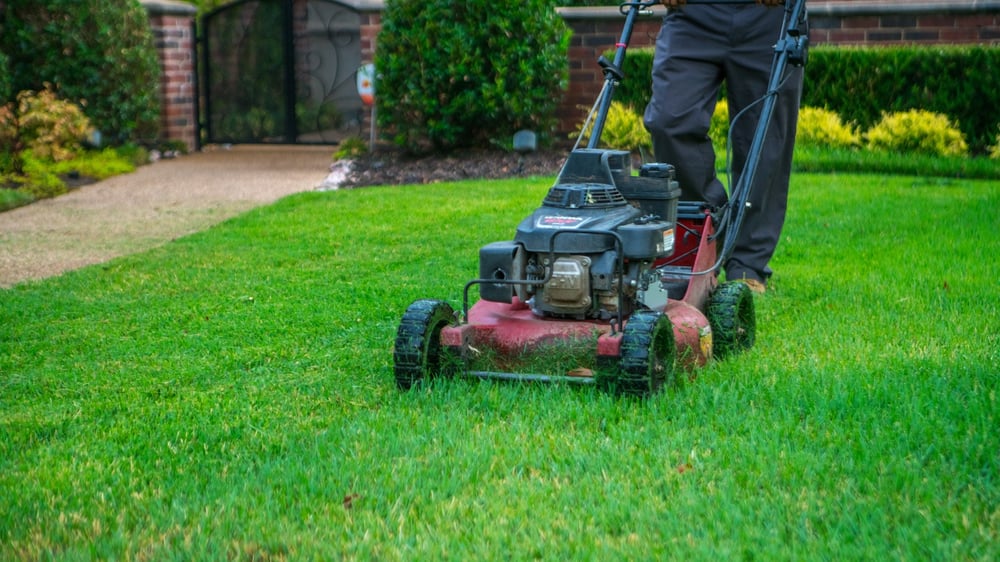
Mowing mistakes can also lead to an unhealthy lawn in Texas. A common culprit behind a yellowing lawn is improper mowing.
When you cut the grass too short, you harm its ability to perform photosynthesis which is essential for healthy growth. If your lawn is starting to turn yellow, it could be the result of being repeatedly cut too short. While we know that people do tend to prefer a shorter lawn, the color is often the most important factor. And a slightly taller lawn is usually a greener lawn thanks to the photosynthesis process.
Grass that is repeatedly cut too short is also more prone to problems with disease, pests, and even weed pressure. All of these can lead to more maintenance headaches down to the road as opposed to saving you any time.
Fertilization
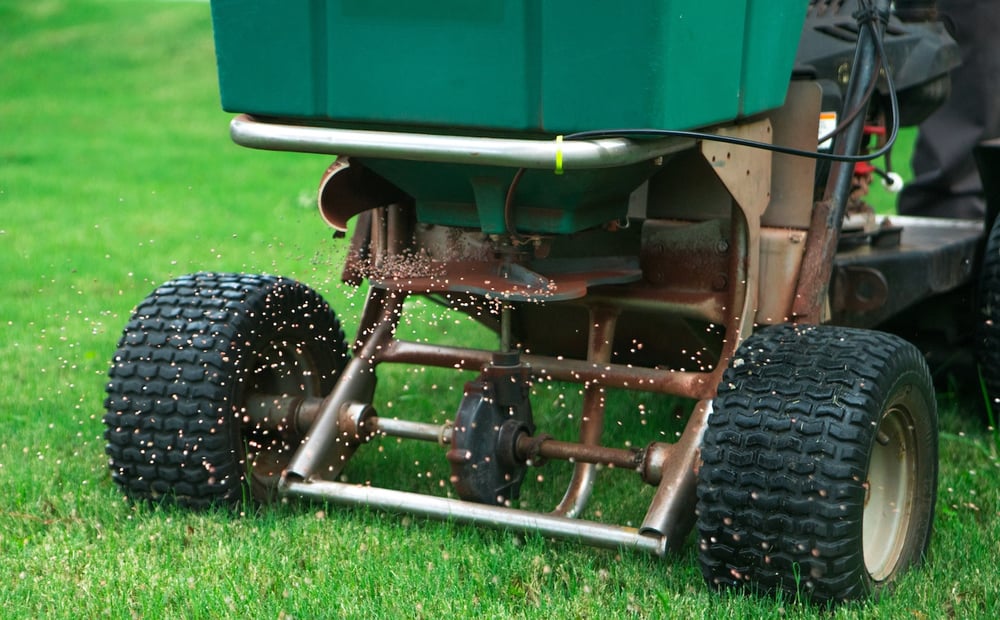
Fertilization also plays a critical role in the overall appearance and health of your lawn. If you’re not fertilizing (or fertilizing at the wrong time or with the wrong amount), it’s going to have an impact.
With fertilizer, you can run into having “too much of a good thing.”
Overfertilizing the lawn tends to be one of the more common lawn care mistakes related to product application. Fertilizer burn can occur when too much fertilizer is applied and the lawn turns yellow or brown. This can be particularly challenging here in North Texas where our hot climate makes fertilizer burn even more likely to occur.
Pests and lawn diseases
A lawn that is struggling in North Texas may also be facing disease and pest pressure. These problems can come on pretty quickly and therefore might be a reason why you feel like your lawn went downhill overnight.
Oftentimes, lawn pest damage goes unnoticed until it becomes severe. One day your lawn might have looked fine and the next it may be suffering from brown patches. This is a sign that Texas lawn pests may have been feasting—unbeknownst to you!
The same is true for lawn disease. When the conditions are just right, lawn fungus can strike and spread quickly. This can lead to a dramatic decline in your lawn’s appearance and health.
Environmental factors
As if everything that we’ve mentioned so far isn’t enough, lawns in North Texas also have to survive in incredibly harsh conditions. Our intense heat and drought conditions make it easy for a lawn to struggle. And if you’ve already got one or more of these issues, various environmental factors can compound the problem.
How to fix an unhealthy lawn
As you can tell, we’ve spent the majority of this article talking about potential lawn problems and their causes. That’s because determining what’s going on is going to be a critical step in fixing the issues.
But getting that proper diagnosis is not simple. This is why we recommend bringing in an expert.
Without the proper diagnosis of the problem, you’re just going to find yourself in an endless cycle. That might be where you’re stuck now. You’re saying: Why isn’t my lawn healthy when I’m doing everything right?!
Without a proper diagnosis, you could even make the problem worse. For instance, if you think your lawn is experiencing drought stress and you start watering a lot more, but it turns out it was a fungus, you could make the problem significantly worse. Fungal diseases thrive and spread in wet conditions.
If you truly want the best lawn on the block, then it’s important to leave the care of your lawn in the hands of a knowledgeable lawn care professional. Not only will this take the burden off of you, but it will also ensure that lawn problems are caught early and handled properly. The result will be a thick, green lawn that you love.

Getting the best lawn on the block with lawn care services in North Texas
The fact is, lawn care is a lot more complicated than most people realize. It involves a lot of different services all working together at the optimal timing. Because of that, a lot of homeowners would rather leave everything involved in these services up to the pros.
When you partner with a lawn care company that is equipped to manage all of your needs, you don’t have to try and figure everything out on your own. Instead, you can just sit back and relax knowing that a professional has your back. That means you’ll be able to reap the benefits of having the best lawn on the block without all of the work.
Ready to get the results that you desire for your lawn in the Flower Mound, Frisco, Argyle TX area? Get a free quote and then enjoy the best lawn on the block with no worries!