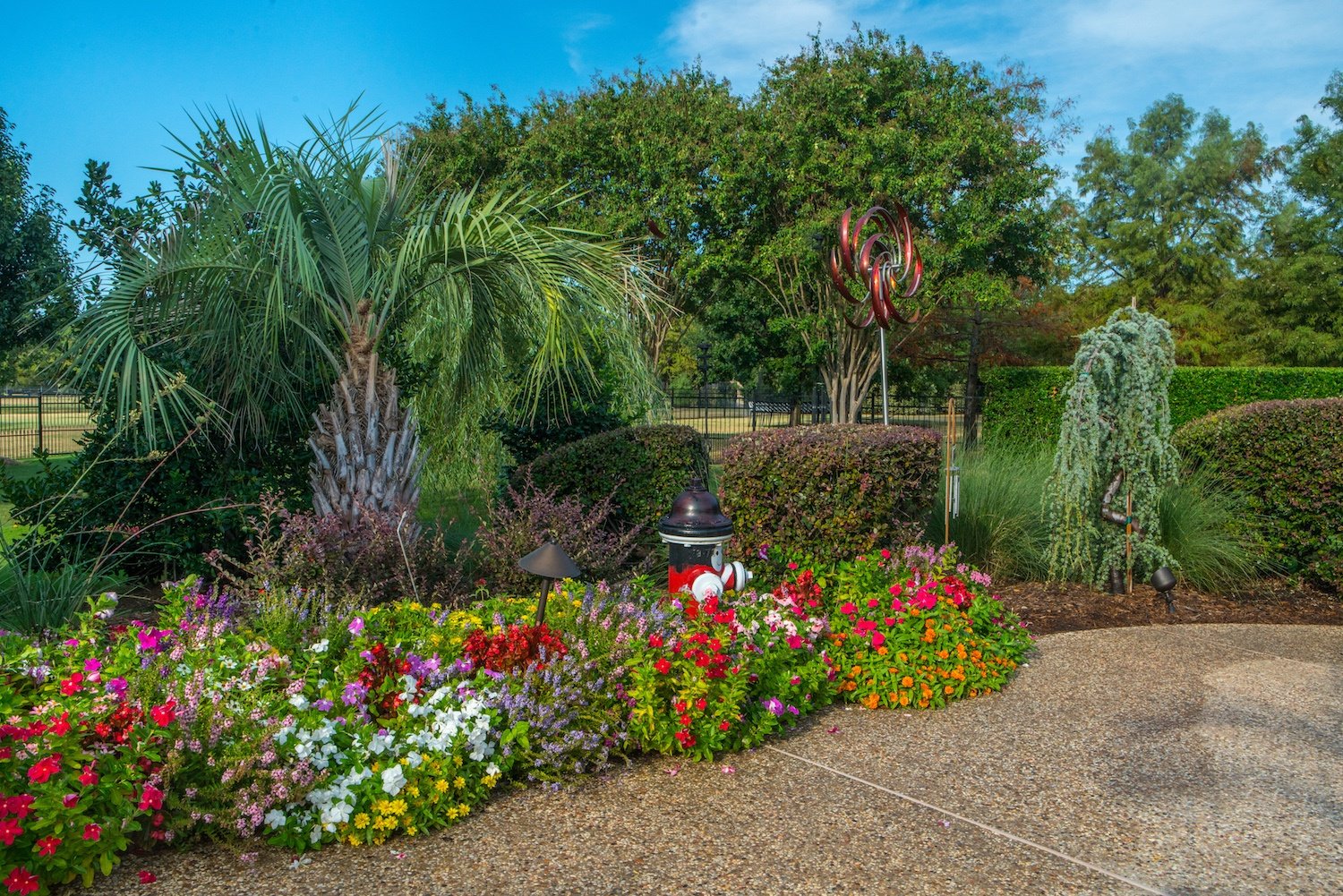
Are you on the hunt for the perfect flowers for your landscape beds? It’s the colorful blooms that can really set your property apart so this is an important decision. But choosing flowers for North Texas landscaping is a bit more complex than simply picking out what “looks nice.”
There are actually quite a few factors that can come into play that will ensure your success.
If you’ve ever just gone out and picked a variety of flowers that you liked (solely based on looks), chances are, they might not have performed as well as you’d hoped they would.
In this article, we’ll help you understand: How do I know which flowers are actually right for my North Texas yard?
We want to make sure that your process of choosing flowers for flower beds on your property is a success so that you can get the most possible value out of your new additions.
Jump to:
- Understanding your yard before selecting flowers for North Texas landscaping
- Other factors to consider when choosing flowers for flower beds
Understanding your yard before selecting flowers for North Texas landscaping
It’s tempting to go to a nursery or the local hardware store that sells flowers and simply pick out what you think is pretty. But if you want it to actually succeed in your landscape, you need to consider some important factors about your specific North Texas property.
What’s your soil like?
Most North Texas yards have a mix of heavy clay and sandy loam. That means that you’ll likely want to choose flowers that can tolerate these conditions.
Our soils tend to not drain that well and that can be a problem for a lot of flowers. Coneflower and Autumn Sage are good choices for our clay-like soils.
How much sun do your beds get?
When choosing flowers for flower beds you’ll also want to consider how much sun they’ll get. Some flowers, like Coneflower, Lantana, and Zinnias, require full sun (6+ hours). Other choices, like Columbine and some Salvias, require partial sun (3-6 hours) to perform their best.
It’s important that you know what your conditions are like before choosing flowers. It is a critical factor when it comes to a successful landscape design. Unfortunately, even some “pros” install plants in places where they are never going to perform well. If you install a plant that needs sun in a shady area (or vice versa), it’s simply never going to look or perform its best.
How much water will you provide?
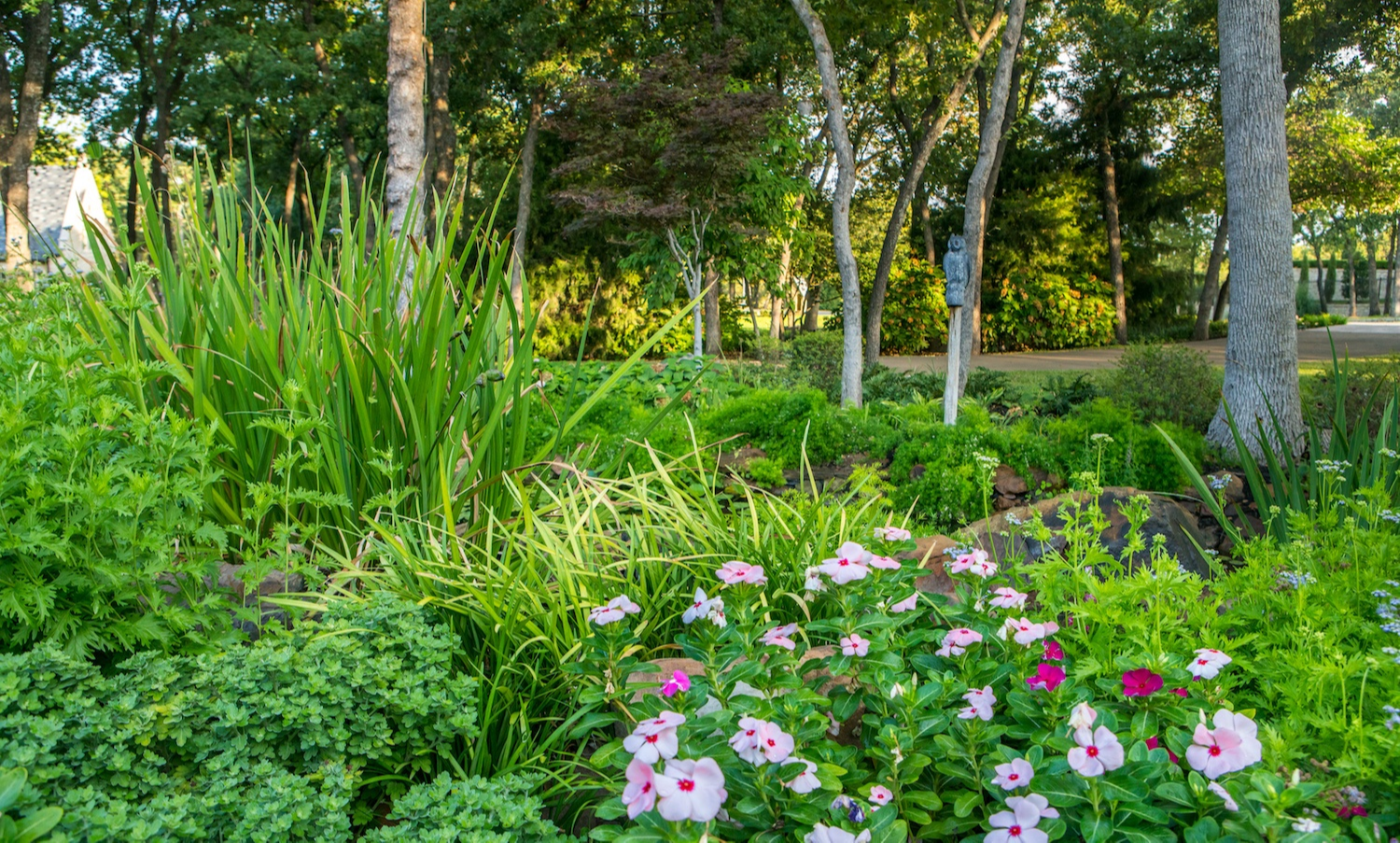
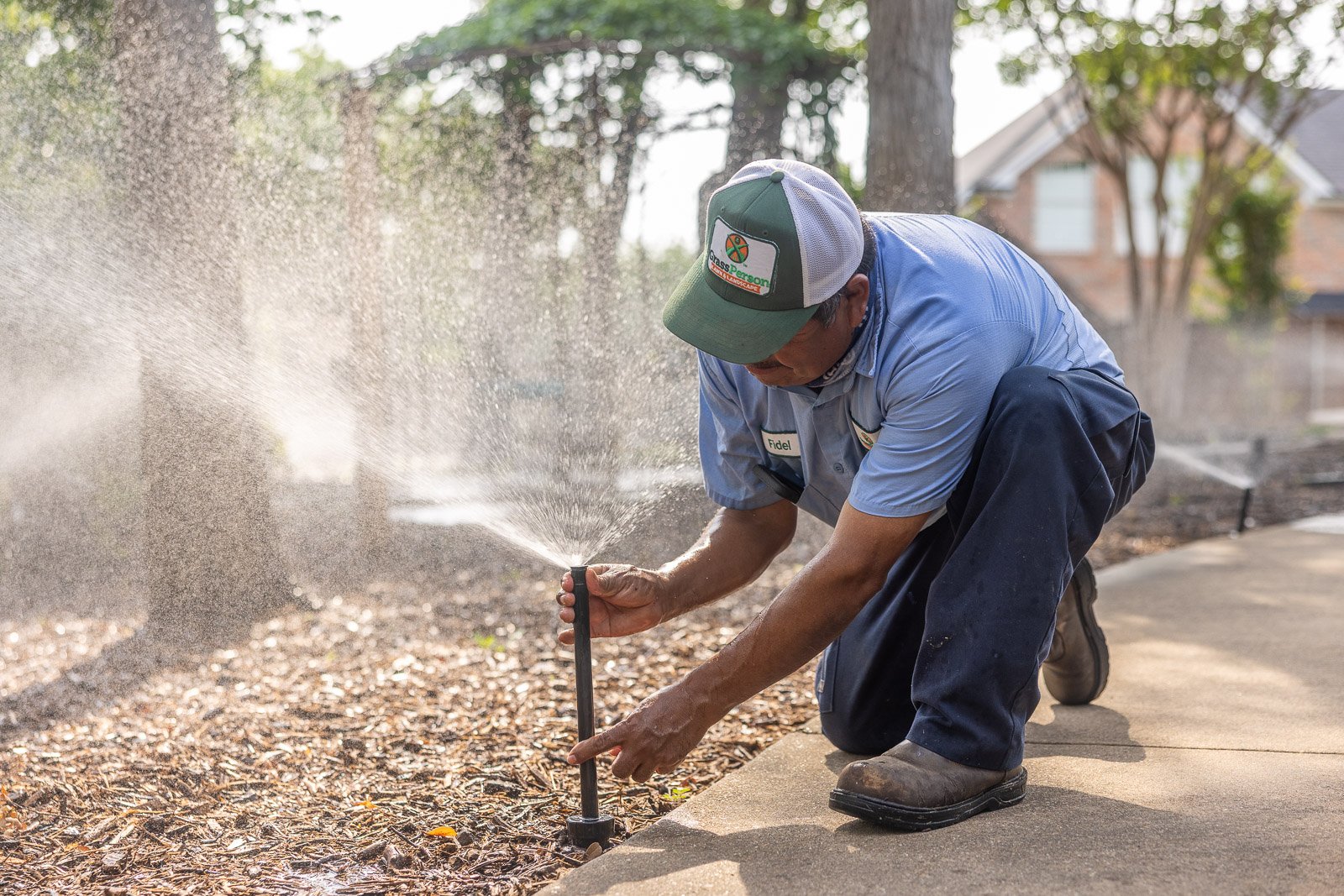
Are you looking for a low-maintenance landscape with drought-tolerant plant choices? Or are you prepared to supply ample water when Mother Nature isn’t offering it? North Texas landscape flowers like Impatiens, Astilbe, and Pansies need consistently wet soil and simply might not perform well if you’re not supplying extra water.
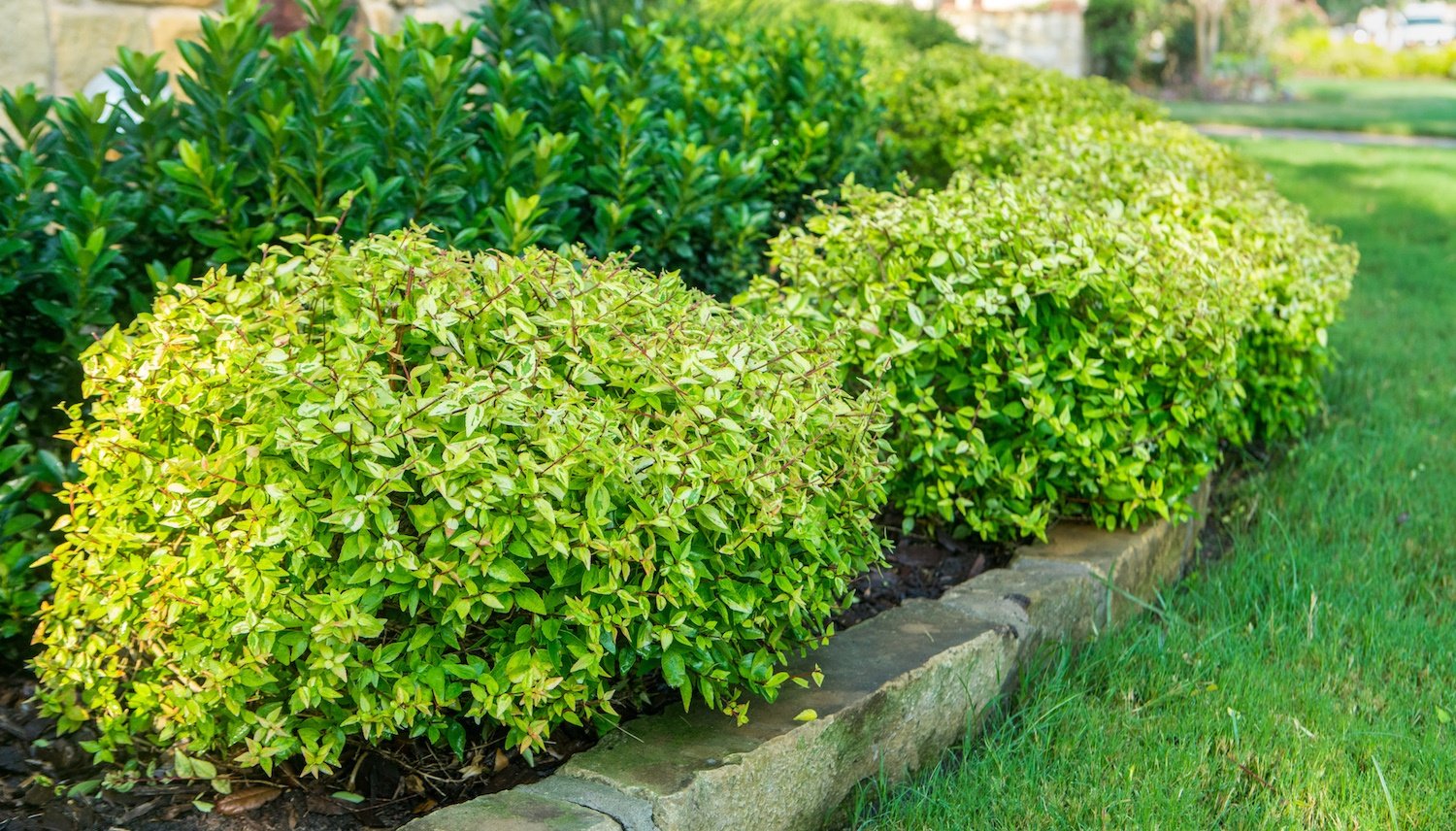
But there are many drought-tolerant choices like Abelia, Liriope, and Lantana that will do just fine even without constant water.
Other factors to consider when choosing flowers for flower beds
First and foremost, you must understand your yard and what it’s able to support. But these aren’t the only considerations. Here are a few more important factors to keep in mind.
Future growth
Another really important consideration is the future growth and size of any landscape plant that you’re considering. While this might not be a big deal for some small flowers, anytime that you get into installing larger plants or shrubs, you really need to think about what they’re going to look like down the road.
It’s quite common for homeowners (and even some landscapers) to fail to consider the future growth of a plant. But if you choose a plant that is going to get too big for the area that it's planted, it’s either going to outgrow the space or take over the other plant material already installed there.
This ends up being a common reason why people have to replace a shrub. But if some forethought and planning was given to the installation, this problem could have been avoided.
Layout and spacing
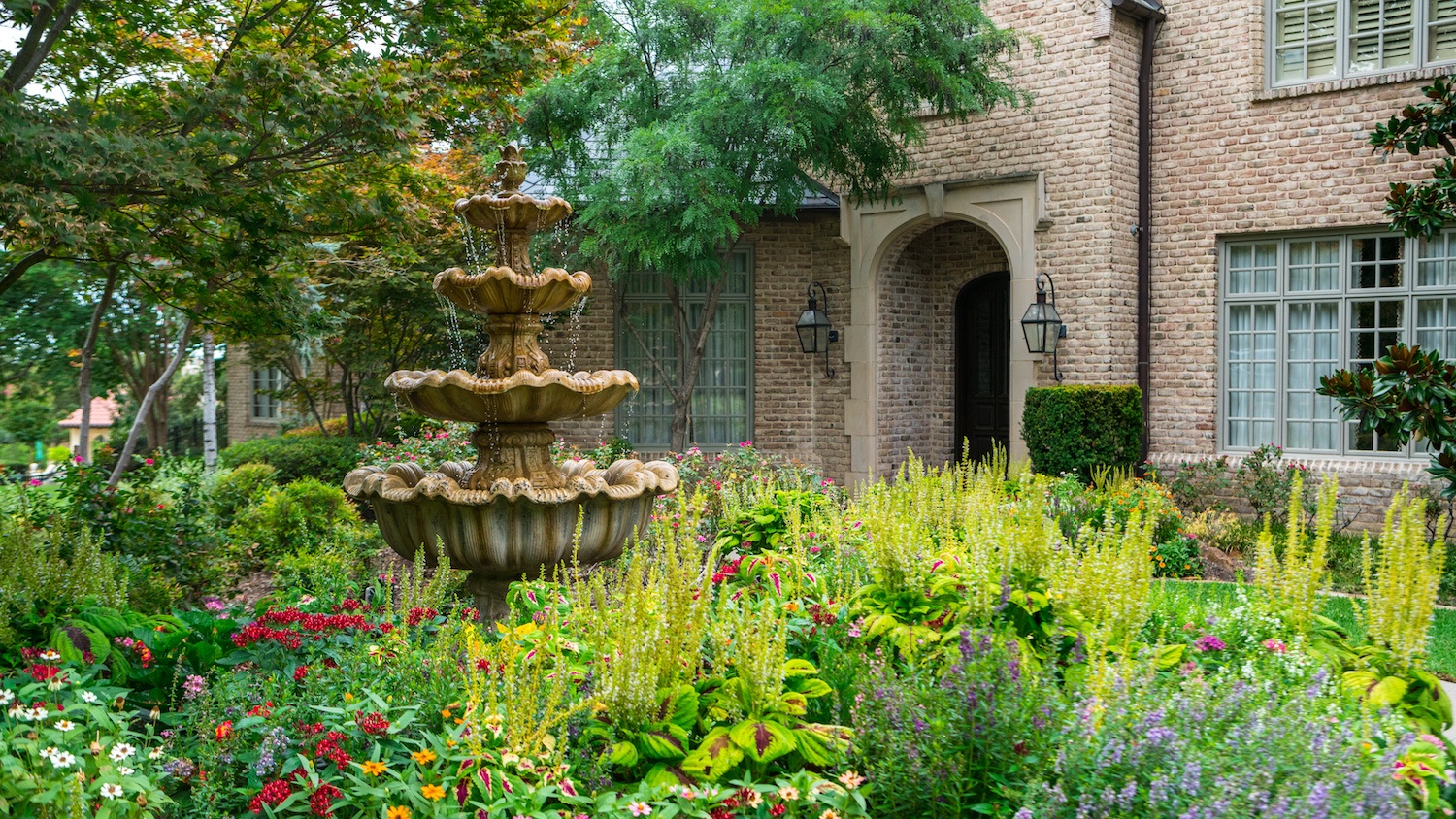
Choosing the right flowers also means considering the layout and spacing of the finished design. While it is generally people’s tendency to gravitate toward what looks best, you must pay attention to other details.
Having flowers “here and there” with no real rhyme or reason isn’t going to give you the wow factor that you want.
In fact, planting flowers without a lot of thought given to the layout can start to look scattered and messy.
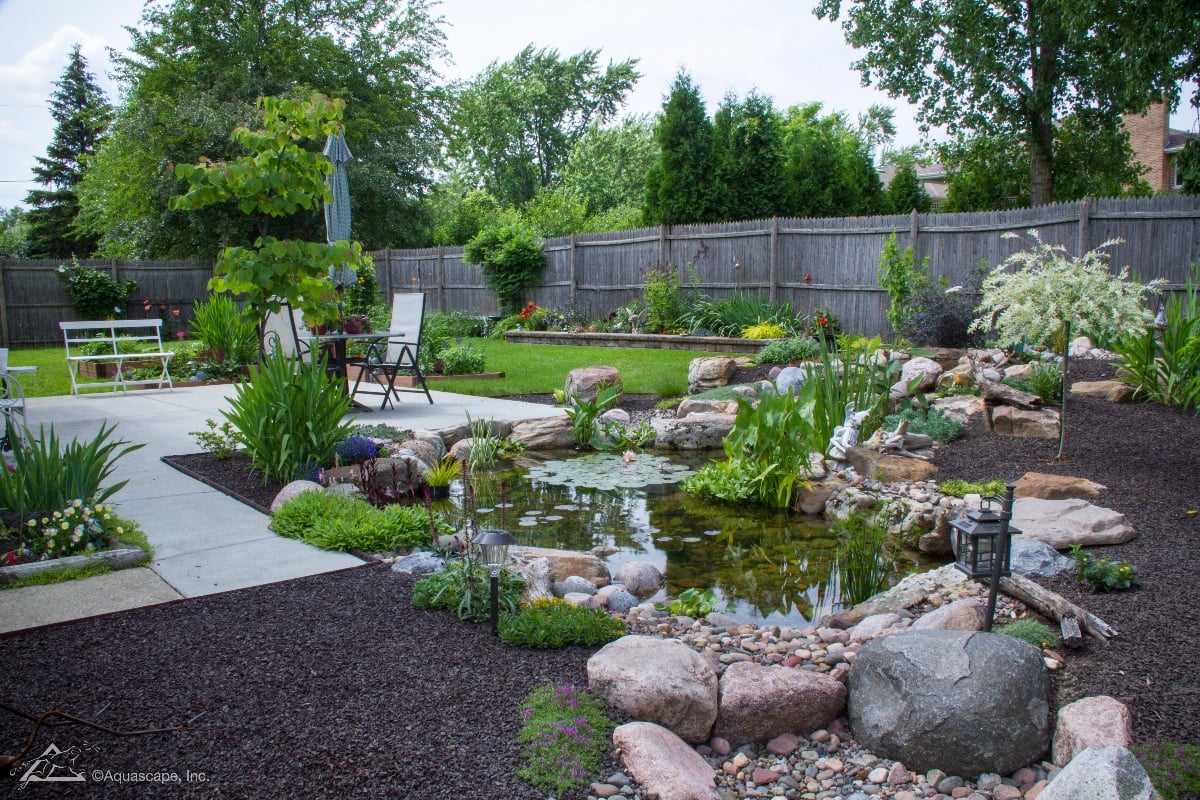
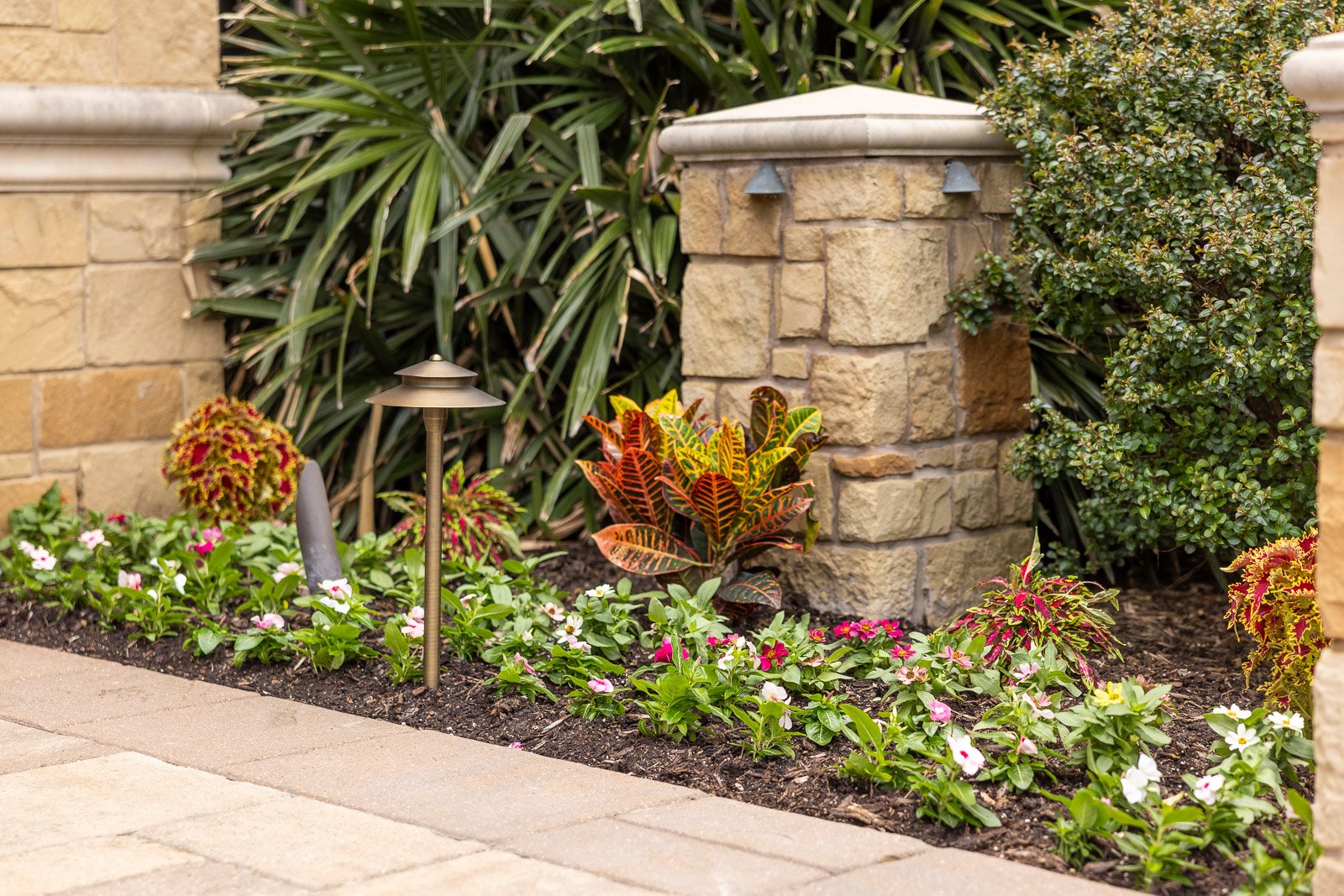
This is why spacing is so critical. You want to make sure that flowers are clustered in large groups where they can make a nice impact.
Color schematics
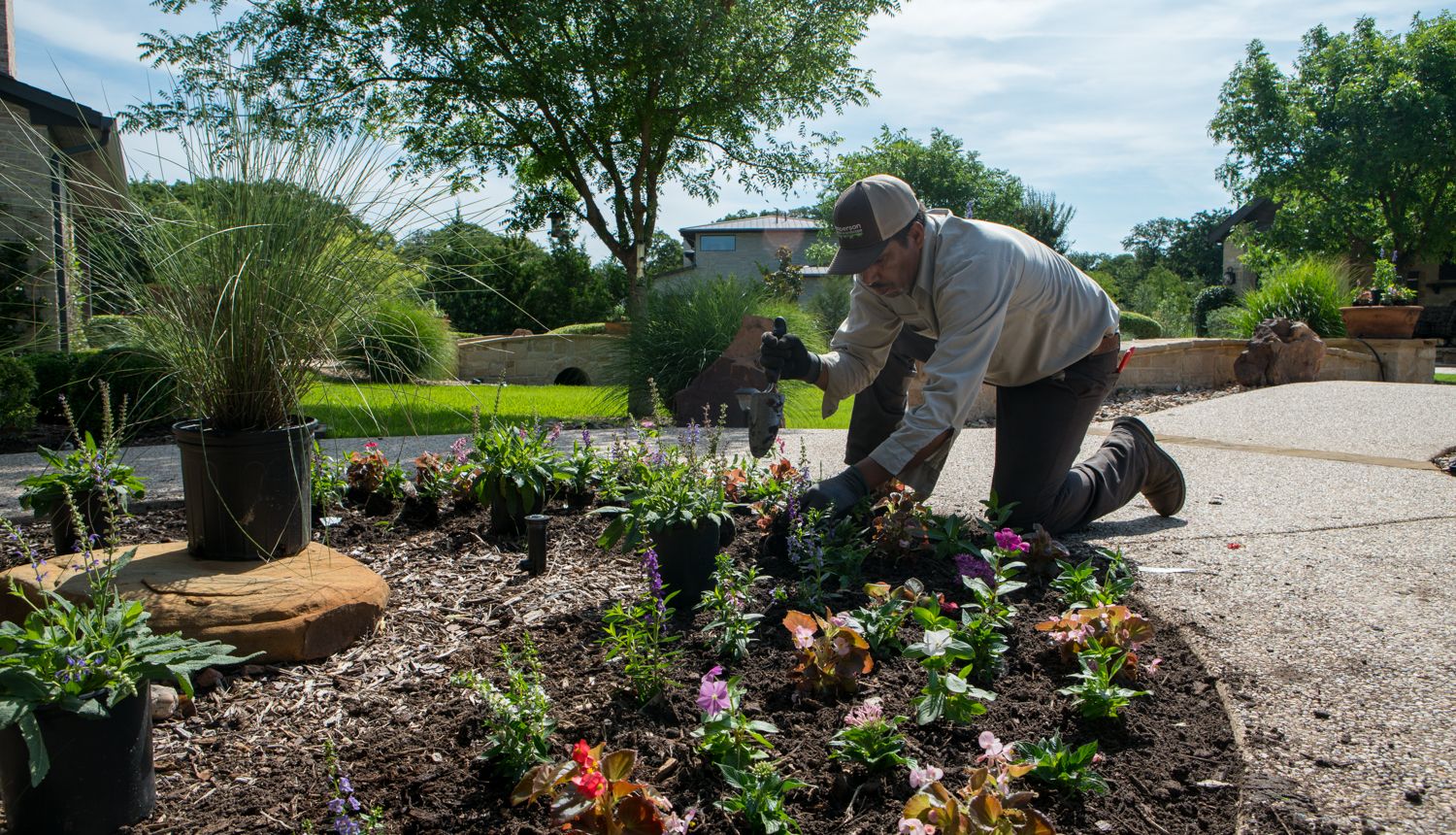
Similarly, when selecting flowers for North Texas landscaping, you want to make sure that the colors you choose work well together. It’s probably not going to look right if you have a wild array of all different colors. If you want it to look like a professionally designed installation, you want to consider the color scheme.
Oftentimes, homeowners like the idea of color “blocks” meaning you might have one large grouping of a certain color (all the same) and then another large grouping of another color (also all the same). This is going to be a lot more impactful than a mix of all different colors with no plan.
We know that people often feel uncertain about choosing a color scheme but it’s an area where a professional can help.
At Grassperson, we have what we have come to call the “Grassperson Mix” for spring and fall flowers to simplify seasonal color for North Texas landscapes. This includes just the right mix of flowers that we have found not only look great together but perform well together, too.
Companion planting
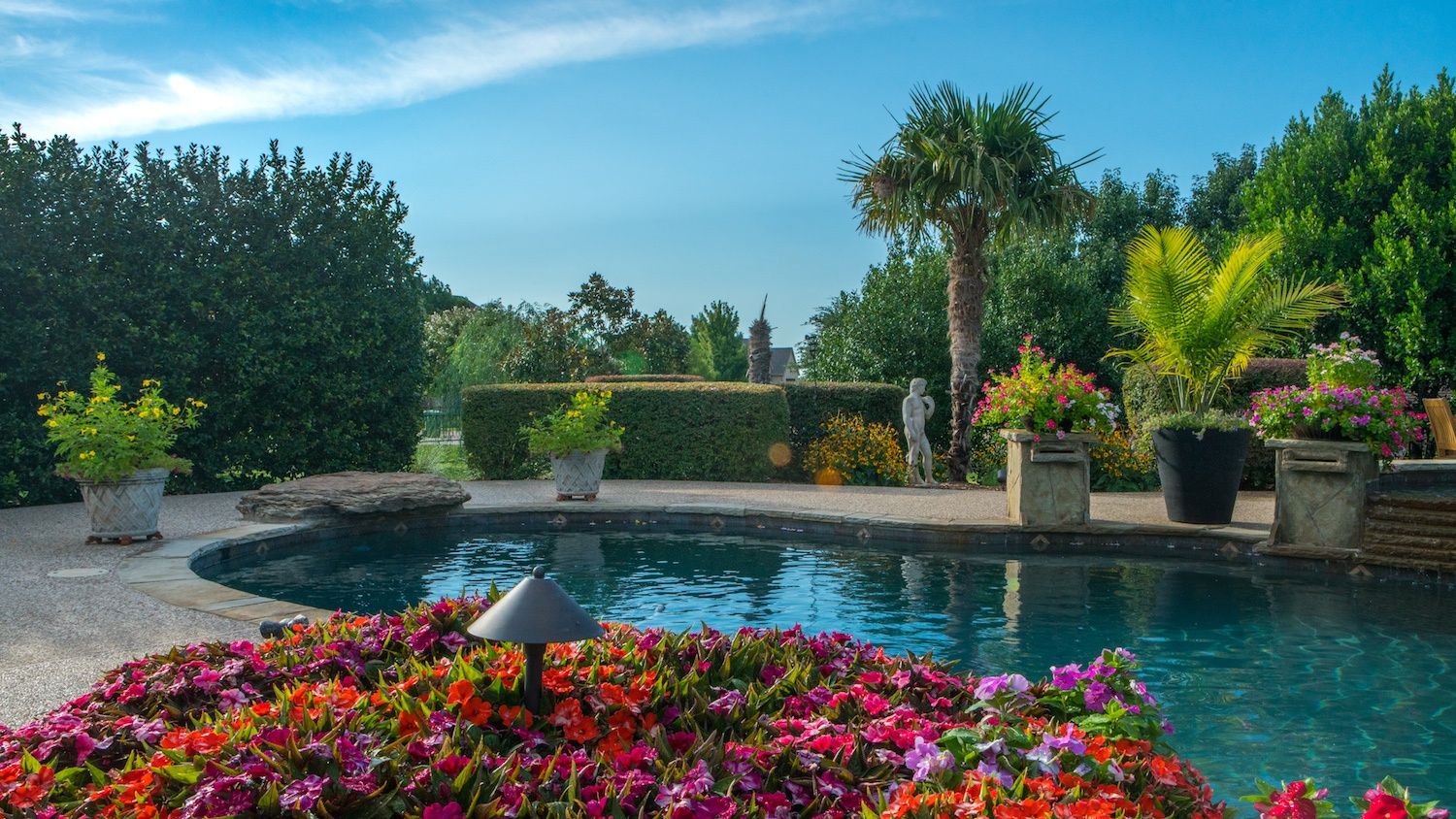
Companion planting is an important factor to the success of your landscape. It means choosing plants that (when growing near each other) can benefit one another. This not only means considering which plants have similar growing conditions (such as moisture and sunlight needs), but also which plants might work well together.
You don’t want plants that are going to outcompete each other and actually start to cause harm. Instead, you want plants that are good companions.
- As an example, in the spring/summer petunias and tulips make good pairs as do potato ivy and fountain grass.
- In the fall, crotons and marigolds work well together as do pansies and violas.
Figuring out what works well together can feel a bit like a puzzle but working with a landscaping professional can remove the guesswork.
Common flower selection mistakes to avoid
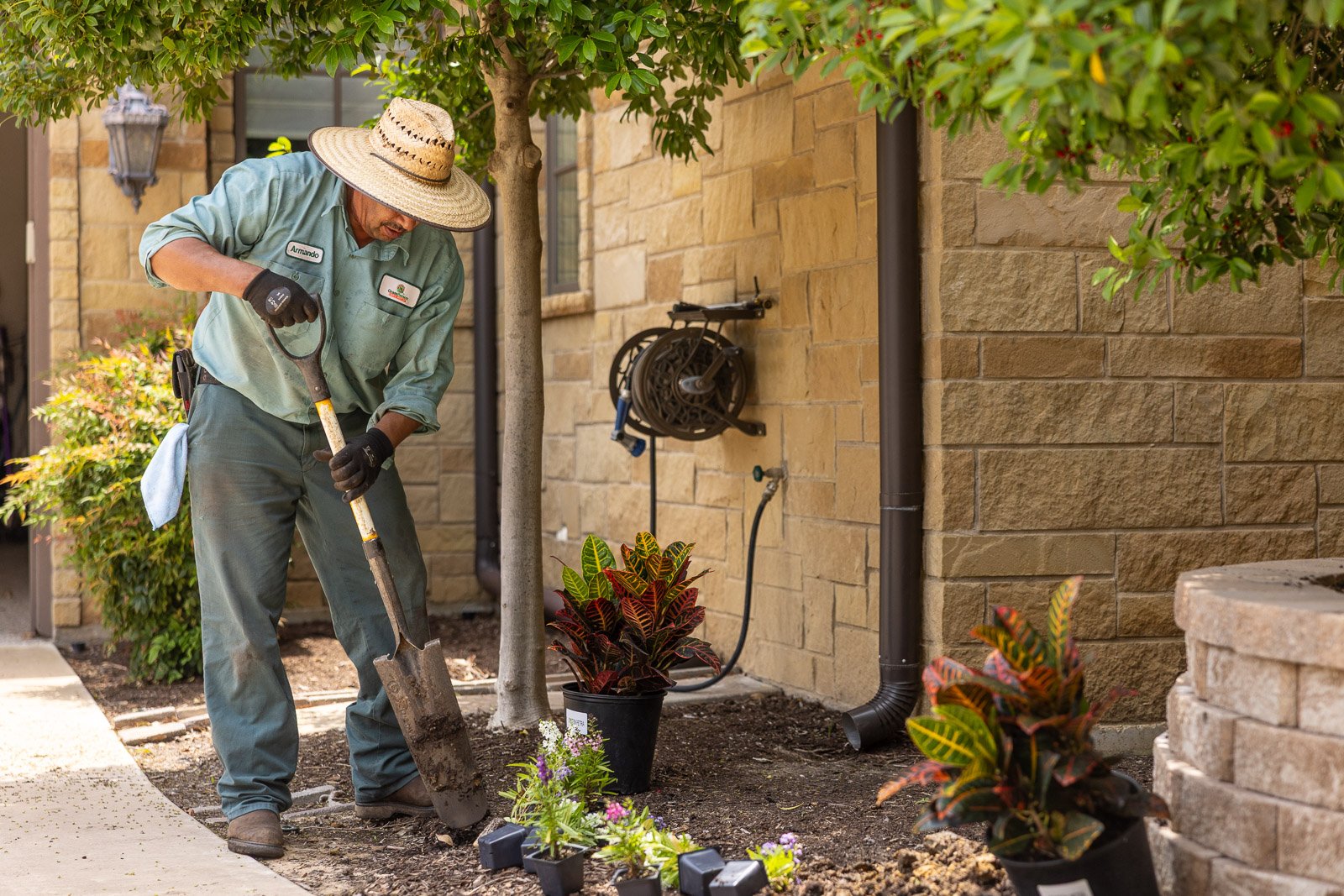
As you can imagine, some of the most common flower selection mistakes involve choosing flowers that were never suited to grow on your property in the first place. That might mean choosing a sun-loving flower and planting it in a shady area. Or choosing a flower that needs perfectly draining soil and installing it in your clay soil.
The truth is, a flower might look beautiful at the garden center but it might never perform as well again in your yard’s conditions. That’s why it’s so important to understand your property and the site specifics of where you’re planting.
Here are some other common flower selection mistakes we see when homeowners choose flowers on their own:
- Choosing high-maintenance flowers but wanting low-maintenance upkeep
- Underestimating the toll North Texas summers can take
- Ignoring water requirements
- Overdoing it with annuals (remember, they need to be replaced every year)
- Failing to consider mature size
Mistakes can be avoided when working with a landscaping pro to select flowers for North Texas landscaping.
FAQs about choosing flowers for Texas landscaping
What flowers require the least maintenance?
Low-maintenance flower choices include those that don’t require excessive watering or care. Your safest bet is to choose North Texas natives that are already adapted to the North Texas conditions.
What flowers can survive drought?
Some of the best drought-tolerant flower choices for Texas landscapes include Lantana, Texas Sage, Autumn Sage and Liriope. They are beautiful choices that will still give you plenty of aesthetic appeal.
What flowers can survive Texas heat?
Flowers that are drought-tolerant also tend to do well in heat and full sun. These include choices like Lantana, Coneflower, and Black-Eyed Susan.
Letting a pro handle flowers for Texas landscaping
If all of this is starting to sound like a bit more work than you bargained for, you can let go of the worries and simply hand these tasks over to a pro.
The fact is, landscaping in North Texas is directly linked to the value of your home…as well as how much you enjoy your property on a day to day basis. The last thing that you want is to be unhappy with how things look simply because you didn’t pick the right flowers.
There’s more to it than people tend to realize but when you hand those tasks to a professional, they can ensure the optimal selection is made. And then can install it, too! That adds up to a professional-looking property that you can be proud of.
After all, if it's the “wow factor” that you’re after, you want to make sure that your property delivers!
At the end of the day, we understand that you simply want to know that your landscape is in good hands and will continue to perform well. By making the wise investment to work with a pro, you can sit back and relax knowing that you’re in good hands.
Ready to have a truly impressive Northern Texas yard? Get in touch with us so we can talk about some enhancements that might work best for your unique property.